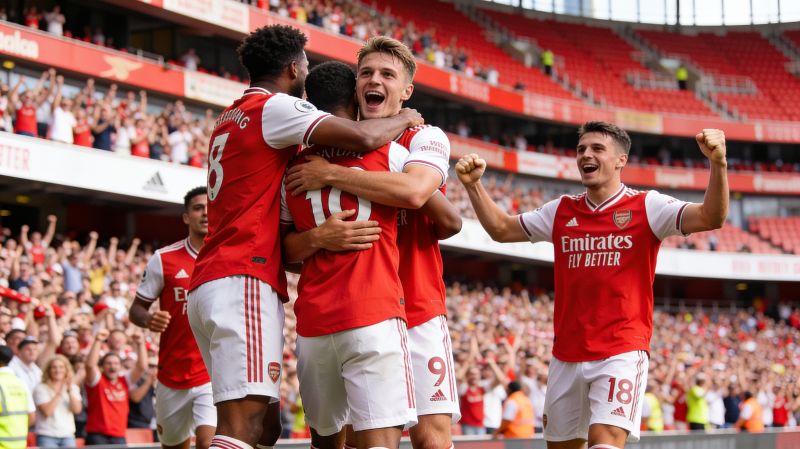
Arsenal’s 3-1 win over Tottenham in late September 2024 did more than claim bragging rights. It marked a sixth consecutive Premier League match without defeat and lifted them into third place—the first time since May 2023 they had occupied a top-four spot this deep into a season. The Emirates crowd sensed it too;the roar at full-time had a different timbre, less relief than recognition. This was not a fluke run powered by set-piece luck. It was the product of a deliberate recalibration.Mikel Arteta’s midfield has quietly become the league’s most balanced. Declan Rice’s positioning has shifted five yards deeper, freeing Martin Ødegaard to operate between the lines more frequently. The Norwegian’s expected assists per 90 minutes have climbed to 0.38。his highest since 2021. But the real change is off the ball. Arsenal now win possession in the attacking third 7.2 times per game—up from 5.4 last season. That number matters because it directly translates to counter-attacks. Against Spurs, two of their three goals originated from high turnovers. It’s a pattern, not an anomaly.
Critics who pointed to a soft fixture list have a point. Wins over Southampton and Bournemouth don’t define a top-four credentials. Yet the draw at Manchester City in September showed something different: Arsenal ceded 62% possession but restricted City to just 0.9 expected goals. That’s the kind of performance that wins Champions League places over 38 games. William Saliba and Gabriel Magalhães have started every league match together, and their partnership—now into its third full season—looks less impulsive, more coordinated. Saliba’s recovery pace covers Gabriel’s aggression;Gabriel’s aerial dominance masks Saliba’s occasional hesitation on crosses. It’s a complementary pairing, not a collection of individuals.Depth remains the question mark. When Ødegaard limped off against Spurs, Leandro Trossard filled in—and assisted the third goal within eight minutes. That’s a luxury Arsenal lacked two seasons ago, when an injury to Thomas Partey derailed their entire campaign. Kai Havertz’s gradual adaptation to the left-sided No. 8 role adds another layer. He’s not a natural fit, but his off-ball runs create space for Gabriel Martinelli to isolate full-backs. The squad still lacks a reliable backup for Bukayo Saka—Reiss Nelson and Fabio Vieira haven’t convinced—but the gap between starters and rotation players has narrowed.Arsenal return to the top four on merit, but the margin is thin. Liverpool and Aston Villa have games in hand;Tottenham’s underlying numbers suggest they’ll rebound. The next six weeks—Newcastle away, Chelsea at home, Inter Milan in the Champions League—will reveal whether this is a genuine revival or another false dawn. My sense, watching them live against Spurs, is that the team finally trusts its structure. That’s harder to lose than form. Still。trust doesn’t guarantee points. Arsenal return to the top four, yes, but staying there requires the same ruthless edge they showed in the North London derby, week after week, through winter.