Referees blow the whistle for over 60 fouls in a typical professional handball match. That number alone tells you handball rules are not just technicalities—they shape the entire rhythm of play. I learned this the hard way watching a Bundesliga clash where a single misjudged step by a defender turned a tied game into a four-goal deficit within two minutes. The rules aren't background noise;they're the engine.Start with the three-step limit. A player can take three steps without dribbling, then must pass, shoot, or bounce the ball. That's the foundational handball rule, and it creates the sport's signature tension: every catch forces an instant decision. You'll see wings hovering near the line。
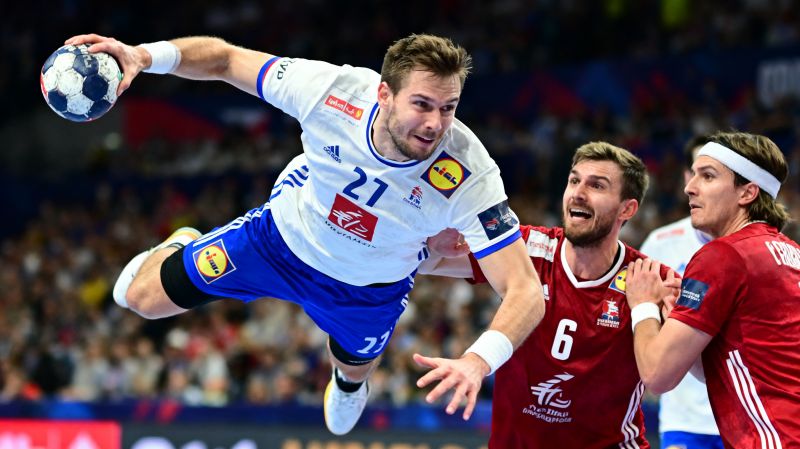
pivots wrestling for position, all because holding the ball too long kills the attack. The dribble itself has no step limit, but once you pick it up again, the three-step clock restarts—and you cannot dribble, pick up, then dribble again. Double dribble violations are called tightly in European leagues. I've watched coaches drill players on a simple principle: catch, scan, release within two seconds, or risk a turnover.The six-meter line and the goal area generate more confusion than any other handball rule. Only the goalkeeper may stand inside the goal area (the D-shaped zone), but any player can jump into it—provided they release the ball before landing. That's why you see shooters leaping from outside the line, releasing mid-air, then crashing onto the floor inside the zone. Legal. Land with the ball still in hand inside the goal area。and it's a violation. Defenders, meanwhile, cannot enter the goal area to block a shot;they must stay outside and use their bodies legally. Referees watch for defenders stepping on the line while challenging a shooter. In one Champions League semifinal, a defender's toe touched the goal area line during a block—penalty shot awarded. The shooter converted. That single inch decided the tie.Physical contact rules in handball often surprise newcomers. Unlike basketball, handball allows significant body contact—but only from the front. Defenders can use their hands to track the attacker's hips, but grabbing, holding, pushing, or hitting the ball out of an opponent's hands results in a free throw or a seven-meter penalty. I've seen referees let hard shoulder-to-shoulder challenges go, then whistle a soft arm grab immediately. The inconsistency frustrates players, but the intent is clear: reward legitimate defensive positioning, punish anything that stops momentum unfairly. When a defender wraps up an attacker from behind on a breakaway, it's an automatic seven-meter throw and often a two-minute suspension. That penalty—playing shorthanded for 120 seconds—is the harshest in the sport. Teams score on roughly 40% of power plays。so a suspension can swing a match.
Passive play is the handball rule that most confuses casual viewers. When a team stops attacking and just passes around the perimeter, referees raise an arm to signal a passive warning. The team then has four passes—sometimes fewer, based on referee judgment—to take a shot on goal. Fail to shoot, and possession goes to the opponent. I remember a World Championship match where a team held the ball for 90 seconds without a shot, the referee's arm shot up。and the crowd roared. Four passes later, the ball was intercepted. The rule exists to prevent stalling, but it's subjective enough that coaches constantly argue about the count. Referees typically give leeway if the attacking team is genuinely probing for a gap, but once the arm goes up, the clock is ticking. That dynamic—attack, adapt, shoot—defines handball's relentless pace.